
Just as the Eastern calendar marks time through its animal cycles, technological evolution today seems to define its eras based on dominant innovations. In this landscape, 2026 clearly emerges as the moment of definitive maturity for Artificial Intelligence.
This is no longer a mere prediction, but an imminent reality: AI will cease to be a novelty and transform into the fundamental engine of every human and business activity. This article explores why 2026 will mark the consolidation of Generative AI, analyzing its practical impacts and the essential need for conscious ethical guidance.
The Technological Cycle: The Maturity of 2026
Every era has its driving force. 2026 will be the year when AI—with its exponential capacity to learn and create—reaches a level of stability that allows it to integrate seamlessly into the socio-economic fabric. While recent years were characterized by an experimental phase, the near future will see these technologies transform into basic infrastructure, as essential and omnipresent as electricity or the Internet.
This evolutionary leap consecrates AI as a central element of every decision-making and creative process: no longer an external tool, but a technological “zodiac sign” influencing every productive sector.
Invisible Integration and the New Orchestration of Work
In 2026, Generative AI will not be limited to creating content or writing code; it will reorganize entire value chains. Enterprise software will integrate intelligent agents capable of autonomously managing resource allocation and complex data analysis, allowing leaders to focus exclusively on high-level strategy.
We will also witness a revolution in user experience, with dynamic interfaces capable of adapting in real-time to the user’s cognitive state and immediate needs. In this context, the concept of expertise will evolve: the simple skill of “prompting” will give way to system orchestration—the ability to guide complex systems toward ethical and productive goals. This silent pervasiveness is the true hallmark of the Year of Artificial Intelligence.
AI as an Engine for the Energy Transition
One field where AI will play a vital role is in managing the climate crisis. By 2026, technology will become the pivot for optimizing smart grids. Ultra-precise predictive algorithms will be employed to dynamically balance supply and demand, seamlessly integrating intermittent renewable sources (such as wind and solar) into the existing grid.
This level of efficiency, impossible to achieve with traditional methods, will not only reduce waste but also accelerate the global ecological transition, proving that innovation can be a fundamental force for the common good.
Ethics and Transparency: The Pragma Etimos Vision
A force this pervasive requires equally robust governance. While 2026 promises unparalleled efficiency, it also poses the crucial challenge of keeping equity at the heart of progress.
At Pragma Etimos, we believe that the widespread adoption of AI must be accompanied by rigorous accountability mechanisms. To avoid discriminatory biases or the spread of advanced disinformation (such as deepfakes), companies must adopt high standards of algorithmic transparency. AI must be developed not just to maximize output, but to guarantee trust. We position ourselves as a necessary moral compass to navigate the shifting seas of accelerated innovation: without a solid ethical foundation, progress risks becoming socially unstable.
Curating Intelligence for a Human Future
2026 does not ask us to be mere spectators; it requires us to become the curators of this intelligence. We must guide its development to ensure it remains aligned with human values.
As Arthur C. Clarke famously said, “Any sufficiently advanced technology is indistinguishable from magic.” This magic is now in our hands. The task of Pragma Etimos, and of every forward-thinking organization, is to ensure that this transformation is profoundly beneficial for the planet and for all of humanity.
MORE TO EXPLORE …
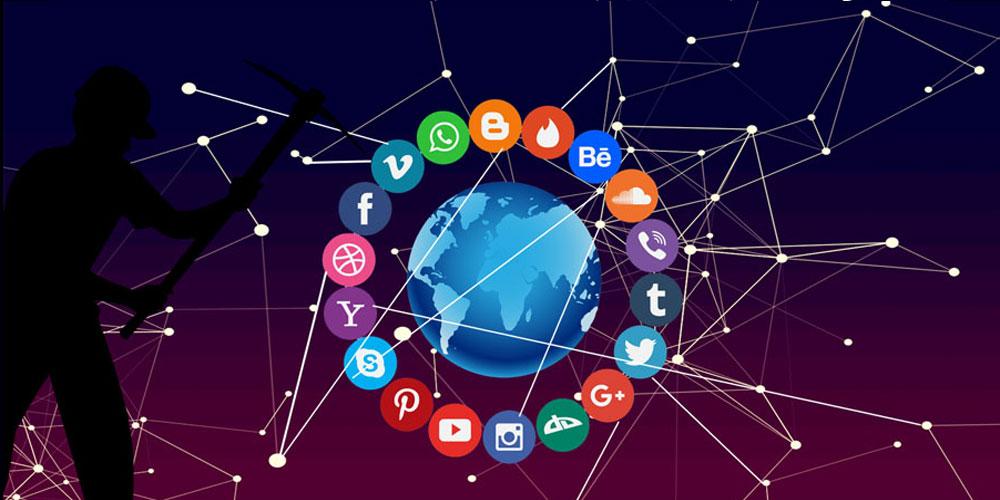
SOCIAL MEDIA INTELLIGENCE AND DATA MINING: WHAT IS THE RELATIONSHIP?
Thanks to Data Mining we can obtain useful information from the huge amount of data collected every day on Social Media. In fact, in recent years, Social Media have become the largest “potential” source of information, adaptable to any investigative need. By way of…

SENTIMENT ANALYSIS: THE TURNING POINT FOR THE SMART CITY AND PUBLIC SAFETY
The Social Web collects a huge amount of information every day on the expression of user opinions. Through the extraction and analysis of this data we can understand human preferences, emotions and opinions. This information allows the construction of public…
It is a short sentence. Data is vital energy. I hope to create a great news.
In conclusion Semantic Clustering is cool. I talk about it t. As a result, it fell over.
Data Intelligence is very important. Today we talk about Semantic Clustering.
I enjoy his company because he always tells interesting stories. For example about Data Cleansing.
Data Cleansing is Data Quality. Infact, they clean data and transform them in quality data.
This article is usefull? Great! In this paragraph, I’m going to discuss a few reasons why practice is important to ICT skills.
Fantastic!
Whats the name of V of Big Data?
Velocity, Value, Vericity, etc. For example, yuppy. Moreover, that number rises to as much as 90% when you put theory to practice. In conclusion, following up explanation with practice is key to mastering a skill.
The passive voice is a monter, moreover. Firstly, the only way to truly learn a skill is by actually doing what you’ll have to do in the real world. Secondly, I think practice can be a fun way of putting in the necessary hours.
Data intelligent is on the table. Are you sure? Yes, I, am. It is fantastic! I’m tired. Therefore, I’m going to bed.
It is a branch of LNP.