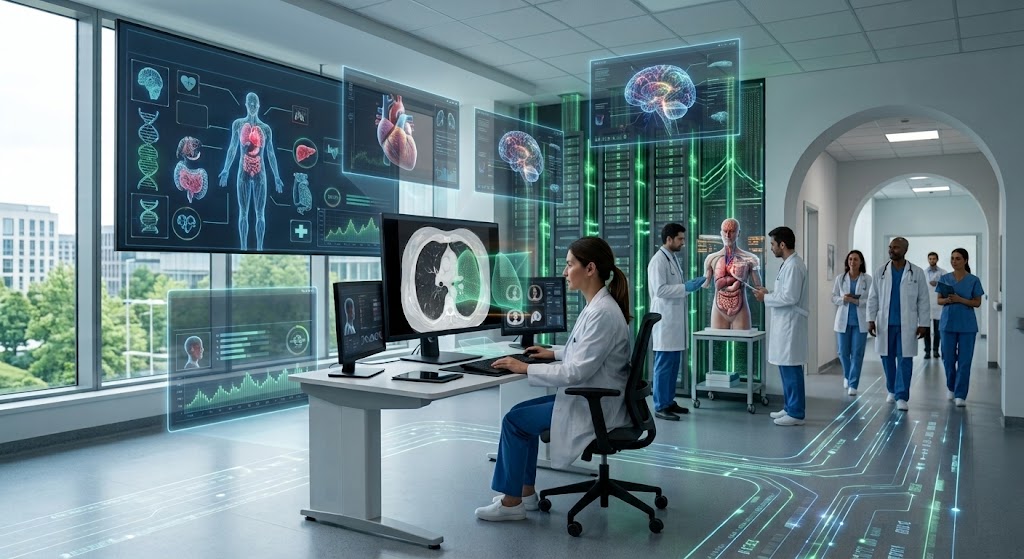
In recent years, scientific research has made giant strides thanks to the integration of advanced data analysis systems in healthcare. The application of artificial intelligence in medicine is enabling doctors to identify diseases with unprecedented precision, improving treatment prospects for millions of patients.
Laboratories and hospitals around the world are adopting algorithms capable of examining large volumes of clinical data in seconds. The application of artificial intelligence in medicine represents one of the most promising frontiers of modern science, combining technology with the expertise of healthcare professionals.
How medical diagnosis and artificial intelligence work together
By analyzing thousands of X-rays, MRIs, and scans, computer models learn to recognize minute anomalies that might escape the human eye in the early stages of a disease. This support allows for timely intervention, significantly increasing the effectiveness of therapies and personalizing treatments based on the individual’s genetic profile.
Beyond radiological imaging, these machine learning tools process electrocardiograms, electronic health records, and genomic sequencing in real time. Cross-referencing this heterogeneous information reveals hidden correlations, offering a detailed overview that supports the physician in formulating a complete and accurate diagnostic picture.
From diagnosis to prevention: predictive medicine
The impact of artificial intelligence is not limited to detecting pre-existing pathologies, but extends to prevention as well. By analyzing environmental, behavioral, and genetic risk factors, predictive models can estimate an individual’s predisposition to developing certain chronic diseases, such as diabetes or cardiovascular disorders. This paradigm shift makes it possible to move from “reactive” medicine—which intervenes when symptoms appear—to “proactive” medicine, capable of planning lifestyle interventions or targeted preventive therapies before the onset of disease.
Despite its incredible potential, human intervention remains irreplaceable. The final clinical decision and the empathetic relationship with the patient must always rest with the doctor. Ensuring health data privacy and preventing algorithms from making automated decisions without oversight is essential to keep artificial intelligence as a tool serving human life and well-being.
Among the main challenges are the scientific validation of models and the transparency of machine decision-making processes (the so-called explainability of AI). Healthcare professionals must be able to understand the logical reasoning behind an algorithm’s diagnostic suggestions, thereby ensuring medical liability and protecting patient safety from potential errors or data biases.
The future of care: a human-machine synergy
The evolution of healthcare technology aims not to replace human expertise, but to amplify it. The synergy between the analytical capacity of computer systems and the doctor’s clinical intuition, sensitivity, and ethics defines the new face of modern medicine. An effective collaboration that promises to make diagnoses faster, more accessible, and tailored to every individual.
MORE TO EXPLORE…

Natural Language Processing: Tasks, Applications and Sentiment Analysis
The human-machine dialogue has been one of the most active areas of research for decades. In recent years, great progress has been made in the field of NLP (Natural Language Processing), although, due to the complexity of human language, the machine is not yet able to understand perfectly… Read more
Chatgpt: a positive revolution if managed correctly
For a few months now, Artificial Intelligence has been making an explosive statement, generating a lot of interest accompanied by doubts, controversies and perplexities.
The wide diffusion of ChatGPT has raised a heated discussion among experts who have focused on understanding the real innovative scope of this intelligent tool. However, the Italian Data Protection Authority has intervened by blocking the use of the data as it does not comply with all the criteria set out in the Data Protection Act…